Background
I am a Research Fellow on RESISTANCE: Resisting Interscalar Authoritarian Networks and Coalitions, a Horizon Europe-funded project, at The Centre for Elections, Democracy, Accountability, and Representation (CEDAR) at the University of Birmingham. The project develops a novel ‘interscalar’ framework from eight sites of research to understand how authoritarianism and resistance to it develop across local, national and transnational lines. Combining insights from political science and human geography, RESISTANCE conisders how ideas, practices, institutions, anti-gender politics, and digital technologies operating between and beyond geographical boundaries constitute modern authoritarianism and resistance to it. Apart from a novel theoretical and methodological framework, the project also seeks to co-create an Interscalar Resistance Toolkit, an early warning system, and a Resistance Playbook with activists, policymakers, and stakeholder organizations. In the project, I contribute to the framework, cross-site analysis, and writing, with a particular focus on the anti-gender politics stream and resistance co-creation streams.
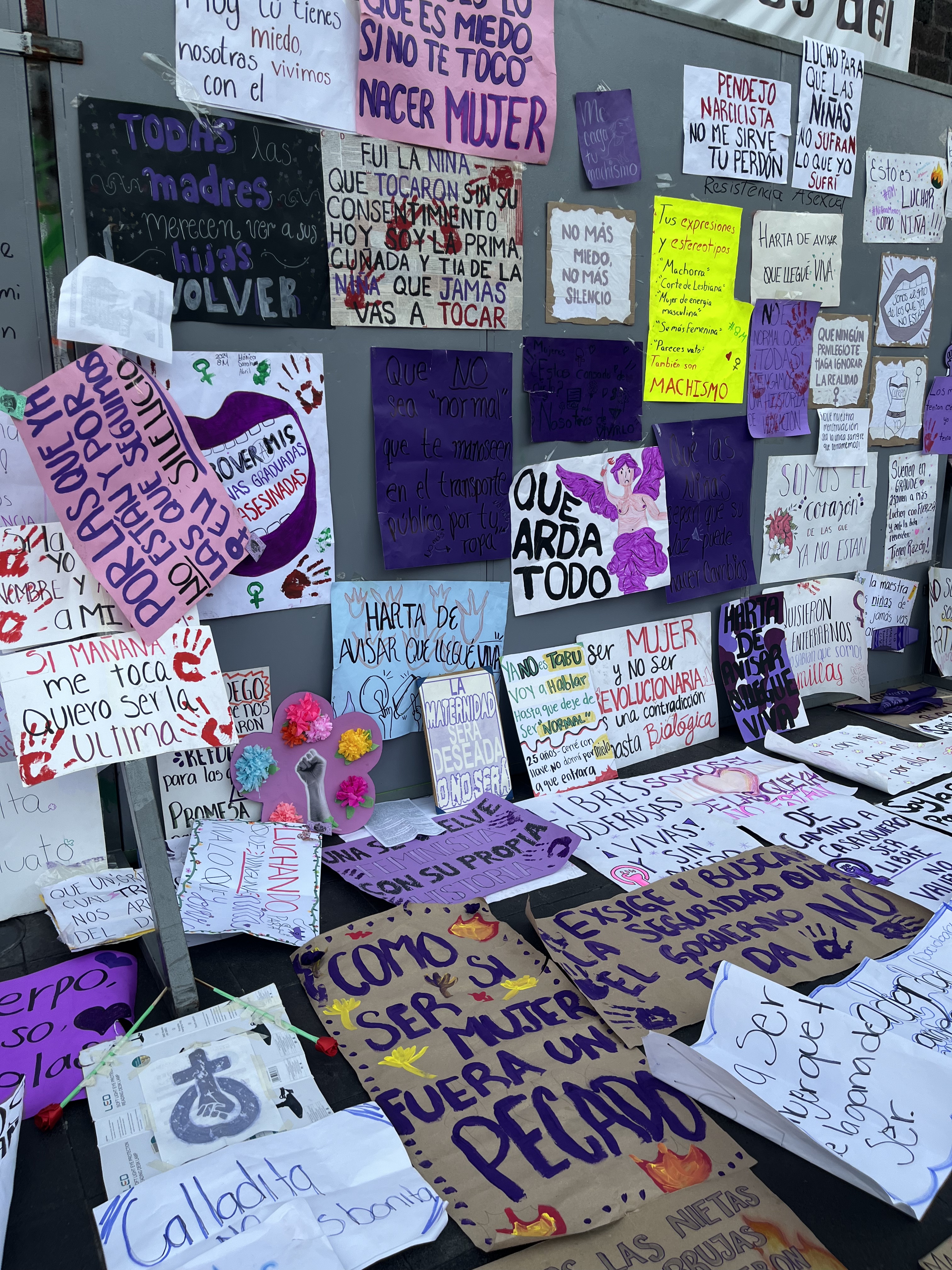
I earned my PhD in International Studies from the Josef Korbel School of Global and Public Affairs, University of Denver in 2026. My dissertation, titled Protests as Democratic Governance: How Social Movements Transform Political Life, considers why women-run social movements create extensive infrastructures in welfare, security, and space during the course of the movement by comparing two movements in India and Mexico. It argues that these infrastructures fill long-term political and social deficits for participants within formal institutions and traces how these infrastructures transform participants from democracy-seeking subjects to democracy-creating ones. You can read more about my dissertation research here. The book project emerging from this dissertation, titled Governing from the Movement: Social Movements and the Limits of Democratic Order, argues that the internal governance of movements is diagnostic of the extent to which formal political orders have broken down for marginalized populations and how they contend with this breakdown.
Prior to my doctoral journey, I completed an M.A. in International Studies in Gender and Conflict at the Josef Korbel School where I was awarded the Sie Fellowship and full-tuition scholarship through the Sie-Cheou Kang Center for International Security and Diplomacy which is awarded to outstanding master’s degree-seeking students from the U.S. and abroad. My M.A. capstone project focused on the dualities of people’s resistance and compliance in state-making in Indian-occupied Kashmir. I also completed an integrated M.A. in Development Studies from the Indian Institute of Technology Madras, India where my M.A. thesis focused on the grey ares between legality and illegality of the Indian Peacekeeping Force deployed in the Sri Lankan Civil War. I have experience conducting semi-structured interviews, oral narrative interviews, administering survey research, and coordinating focus groups.
For six years, I was the Project Manager of the Women’s Rights After War project, funded by the National Science Foundation (NSF) and United Kingdom’s Research and Innovation (UKRI) grant. The project is a multi-method study that considers the substantive impact of post-war women’s rights reforms in six conflict-affected countries: Bosnia and Herzegovina, Colombia, Iraq, Nepal, Rwanda, and Sri Lanka. Having been a part of the project since its inception, I am trained in planning and conducting multi-method qualitative research, analysis, and data management across different geographical contexts. I also have experience in overseeing research processes, coordinating with researchers in different contexts, and building partnerships across research sites through this experience.
I have published articles in Global Studies Quarterly, The Journal of Genocide Research, and the International Feminist Journal of Politics. Additionally, I have been invited to deliver talks and presentations at the Harvard Kennedy School and the Gender, Justice, and Security Hub at the London School of Economics. Furthermore, I’ve had the opportunity to present my research at the International Studies Association’s and American Political Science Association’s Annual Meetings.
As a visiting scholar at the Gender, Justice, and Security Hub at the London School of Economics, I explored the discursive potential of women’s rights reforms and how they can perpetuate harm, employing discourse analysis. My experience also extends to policy-oriented research and advocacy on gender justice and gender-based violence, gained through my work with Oxfam America. In this role, I researched, drafted policy reports, congressional briefings, and produced external communications on progressive gender policies.

